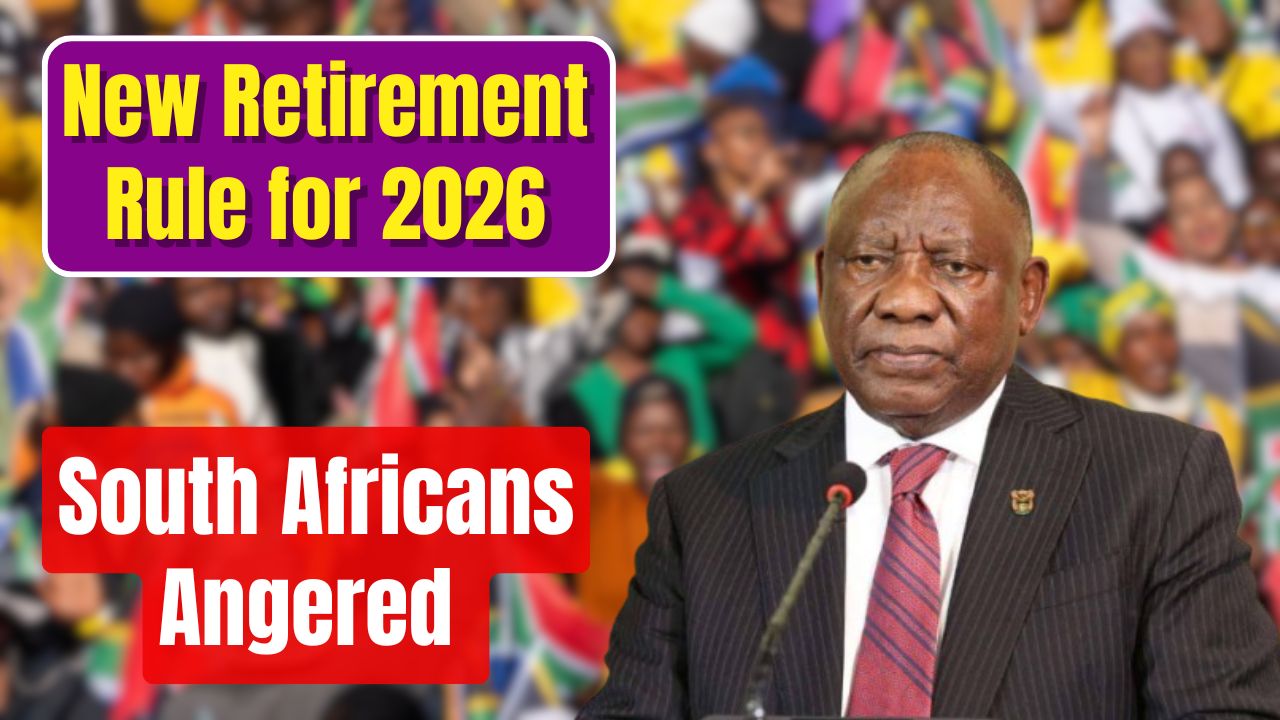
Anger over the rise in the retirement age, effective in 2026, has begun to engulf South Africa as the Government Employees Pension Fund (GEPF) came home clear about the official rise in retirement ages to 67. Numerous groups, workers, unions, and civil society have rejected this settlement due to its shift of economic pressures onto employees.
Changes in Relation to Retirement Age in the GEPF Framework
Instead of retiring at 65, GEPF members must retire at 67, with full benefits subjected to their continuing to work with an active employer. Consequently, the public sector’s long-established retirement goal has been altered, which undermines the future life and career plans of thousands of eligible employees.
Why This Decision Was a Matter of Great Hysteria
The press release triggered outcries primarily because many workers feel that the change was hurried through without due consultation. Public servants argue that longer working years pose additional hardships and are imposed upon those who are already bearing the burden of increasing living costs, health challenges, and little advancement in their careers during the later years of their lives.
Economic Pressures Behind the Move
Supporters suggest longer life expectancies, a burgeoning drain on pensions, and mounting pressure on public finances as reasons for this change. Needless to say, sustainability of the pension is a rising worry as certain authorities assert that longer working lives will indeed protect the long-term stability of the fund.
Impact on Public Sector Workers
A significant number of the employees recognize that the shift to a retirement age of 67 means delaying long-thought-out retirements; some are protesting that this would not be feasible or physically safe for workers to go on for an extended phase of employment. Young employees are also pondering how to advance in their career and plan for retirement as things move along.
Union Response and Growing Resistance
Unions have come out strongly with the view that the torch of judgment is too heavy and is far from reality in the workplace. The unions are pressing for pp,legal challenges, demonstrations, and then new negotiations, asking for either a reversal of the decision or exemptions that would render this agreement exempt from some types of labor.
Public Reaction and Social Debate
The decision has sparked once more national debate, what with regards to retirement, ageing, and employment in South Africa. The decision has been condemned by numerous citizens who argue that, by raising the retirement ages, opportunities are limited to the younger generation of jobseekers. On the other side, others claim that by extending the earnings of older workers instead of moving them into retirement will only make the unemployment woes worse.
What Happens Next
The resistance is building up very strong behind the scenes in order for any policymakers to elaborate on the implementation details and for them to include any transitional measures. Whether any concessions will be agreed upon remains unclear, but this policy, so far, is to dominate labour and economic discussions throughout 2026.
Increasing the GEPF pension age to 67 is about South Africa’s most controversial policy this year. The issue has pitted national uproar epitomizing a broader struggle between economic sustainability and the financial reality for South African workers concerning a profound uncertainty about their retirement future.