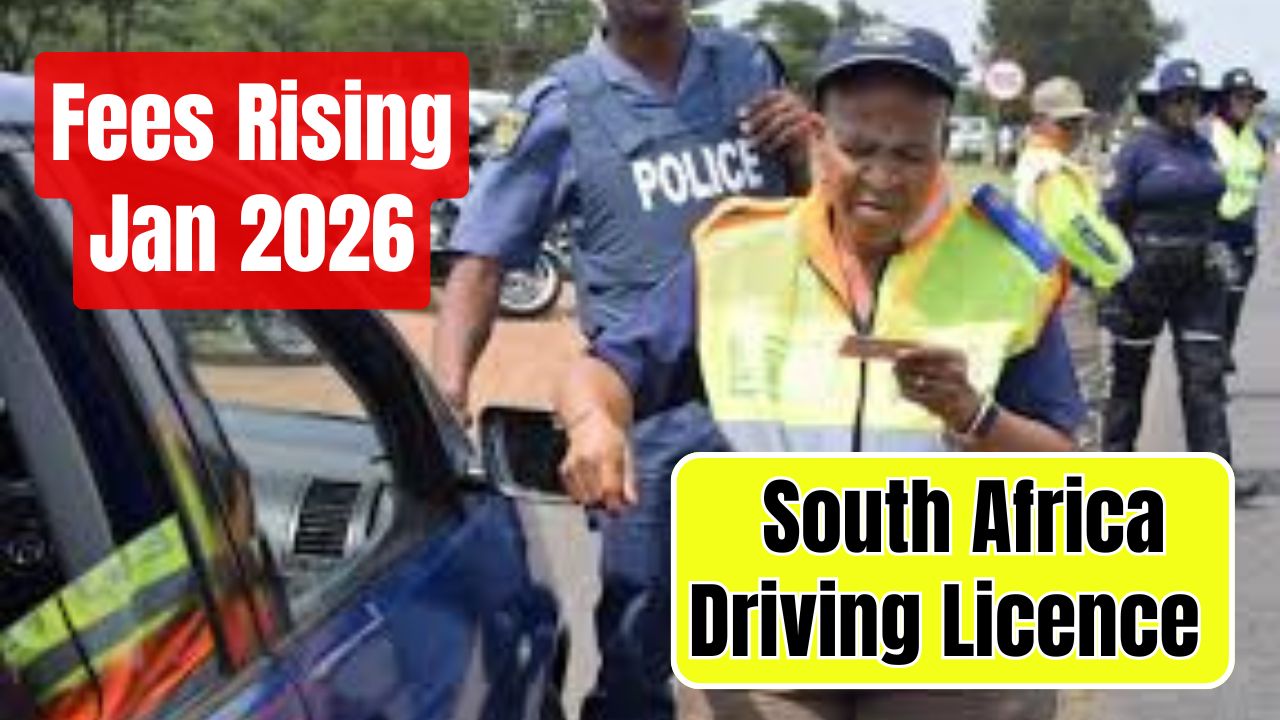
Things are really about to change in South Africa over driver licensing fees to become effective from January 2026. The Instagram message also saw the National Transport Department updating its charges for the learner’s licences, driver’s licences, card renewals, and upgrading. This new methodology was created to modernize and improve the drivers’ licensing framework while enhancing other necessary administrative and testing services with fewer funds growing into settlements for all corners of South Africa.
Scope of New Fees
On a new and changed cost structure, applying for the driver’s licence, getting it renewed, or writing the test will bring about increased costs. The hike in charges reflects enhanced administrative cost, upgrade costs to the system, and basically enlarged services along with digital processing. The operating structure for fees also helps in cutting the vehicle’s time partying during the process by pushing forward for electronic applications and test slots duly booked by the applicant.
Changes in 2026:
- Transaction Type Fee Till Dec 2025 Fee with Jan 2026
- Learner’s Licence Application R140 R180
- Driving Licence Card Issuance R180 R230
- Licence Renewal R120 R160
- Driving Test Booking R180 R220
- Duplicate Licence (Lost/Stolen) R100 R140
The Reason for the Increase in Fees
Transport authorities specify that the reasons for the revisions are the need to cover increasing administrative costs, subsidize the expansion of the facility of license-testing centers, and, the swing towards proficient digital systems for application and processing. Newer technologies in terms of online booking portals and E-Learning resources drive continuous investments for better implementation, explaining another major reason why the structure of fees is set the way it is.
Authorities have reported that the change in the fees was with the consult of provincial licensing departments to be reflected in services that strived to be sustainable and accessible to the public.
The Effect On Drivers
The pocket-wise revised fees may expect many South Africans to alleviate a little in expenses budgeted for license-related projects. For the first-time essayists, mainly young drivers and the newly-driver motorist carving their way, the fee hike in specific areas-learner’s license and test bookings-has become most severe. Retesting fee doubles will be most apparent to those who reapply.
Drivers whose licenses are due for renewal and who renew their licences promptly before the expiry can pay fees based on the older rates (up to 31 December 2025) with the new fees taking charge thereafter. It is anticipated that many drivers will take advantage of the reduced fees through accomplishing their transactions before the year ends.
On a flip side, the fee revision throws several indirect benefits.
Rising fees are factoring heavily in public discourse, although officials vow to pass on the benefits to driving applicants through decreased processing time, improved services, and better waiting periods at licensing bureaus. This adjusted structure urges a newer and potentially more modern transport administration, with better-defined processing timelines and a higher degree of scheduling flexibility. Transport departments from all over are also training more support staff under the new licensing model for efficient service delivery.
Consequently
The news from South African drivers that from January 2026 to date, the new costs show that license fee changes still represent significant highlights in the administration of road licensing in South Africa. So, in order to avoid sticker shock now, drivers should be familiar with the new fee schedule. Although the adjustments may bring added costs to bear, these increases will translate into enhanced service quality and a new era in digital convenience for all national drivers in the long run.