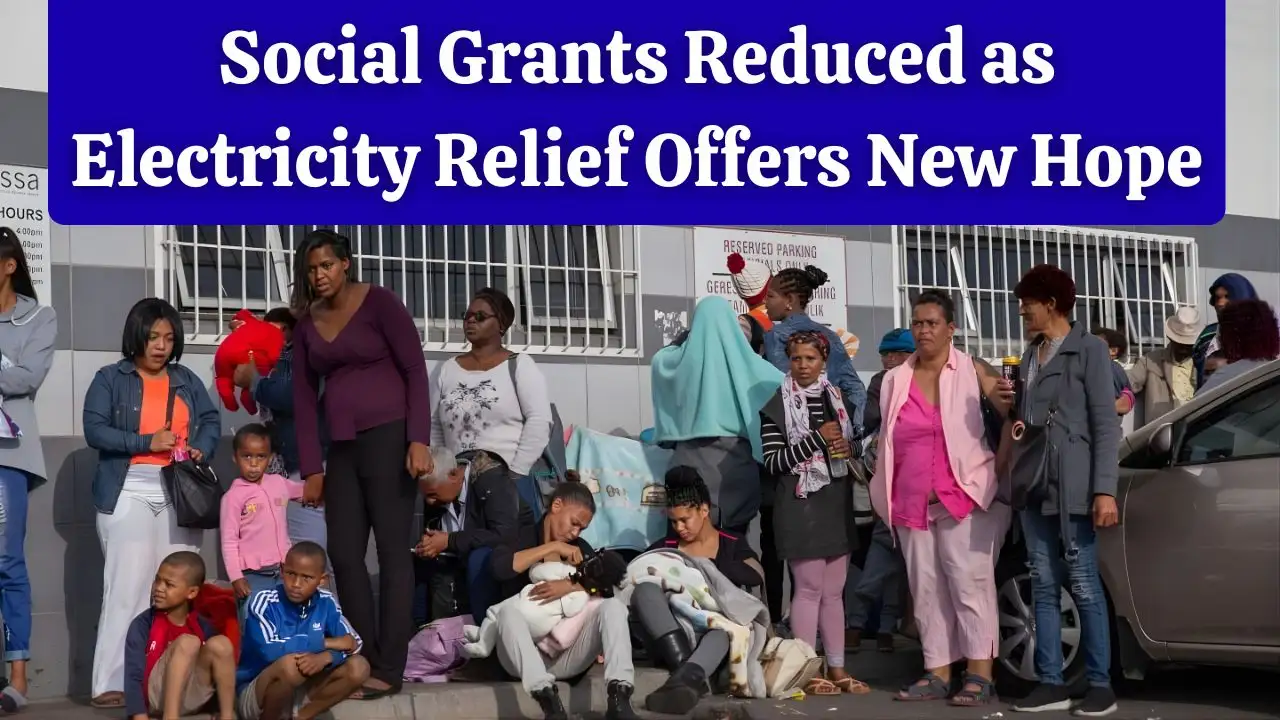
South Africa is set to undertake tremendous policy adjustment after the start of reducing several social grants and introducing interventions to alleviate or lessen electricity costs for households. This shift is a cornerstone change in government policy towards resourcing for the long term instead of resourcing as an income provision only.
What are the reasons for reducing social grants?
Pressure is growing on the national budget to cut down or eliminate some social grants. Rise in borrowing, decrease in economic growth and rising wage demands have obliged policy makers to reassess some aspects of social assistance. The authorities, however, point out that when taken short-term relief measures were introduced during economic downturns, they were never meant to be debilitating. Rather, redirecting resources to infrastructure and economic recovery appears to be the solution.
What Is The Impact Of Grant Reductions?
A cut in social grants would be very harrowing for many South Africans. For households that used the grant money every month to cover basic needs, the sharp financial pinch will almost be immediate. Of course, a permanent grant is in place for certain vulnerable groups, including the elderly and people with disabilities, but some of the short-term grants, top-up grants, or special grants are to be phased out, which says that these affected families will have to adjust their budgets quite sensibly.
Electricity Relief Brings Some Financial Breathing Room
On the flip side, the cost of electricity is on a downward trend to provide targeted relief. Government interventions will include revised tariff structures, state-of-charge subsidies for those households that qualify, and pricing settings on efficiency. It is hoped, through these modifications, that the monthly burden on consumers will be alleviated by a little relief in relation to the non-cash support for the lower- and middle-income families.
Who Benefits From Lower Electricity Costs?
A reduction in electricity rates should bring benefits for a wide variety of households, especially those using electricity resource management (ERM)-based prepaid meters and those on non-basic energy plans. Small-Scale enterprises and street-traders, the cost of whose operations depends significantly on the cost of electricity, will gain a reprieve due to decreased electricity costs. According to the officials, this will foster responsible energy use, while still providing essential economic backup.
Possible Benefits for the South African Luxury
The government is moving from direct income grants to indirect cost measures. The cost savings from electricity may not make up for lost income in the form of a grant, but they certainly would result in savings on essential household expenses. South Africans are therefore being called upon to make plans for their future in terms of household electricity usage and to investigate all instruments that are there to help them as the country adjusts to the new policy landscape.