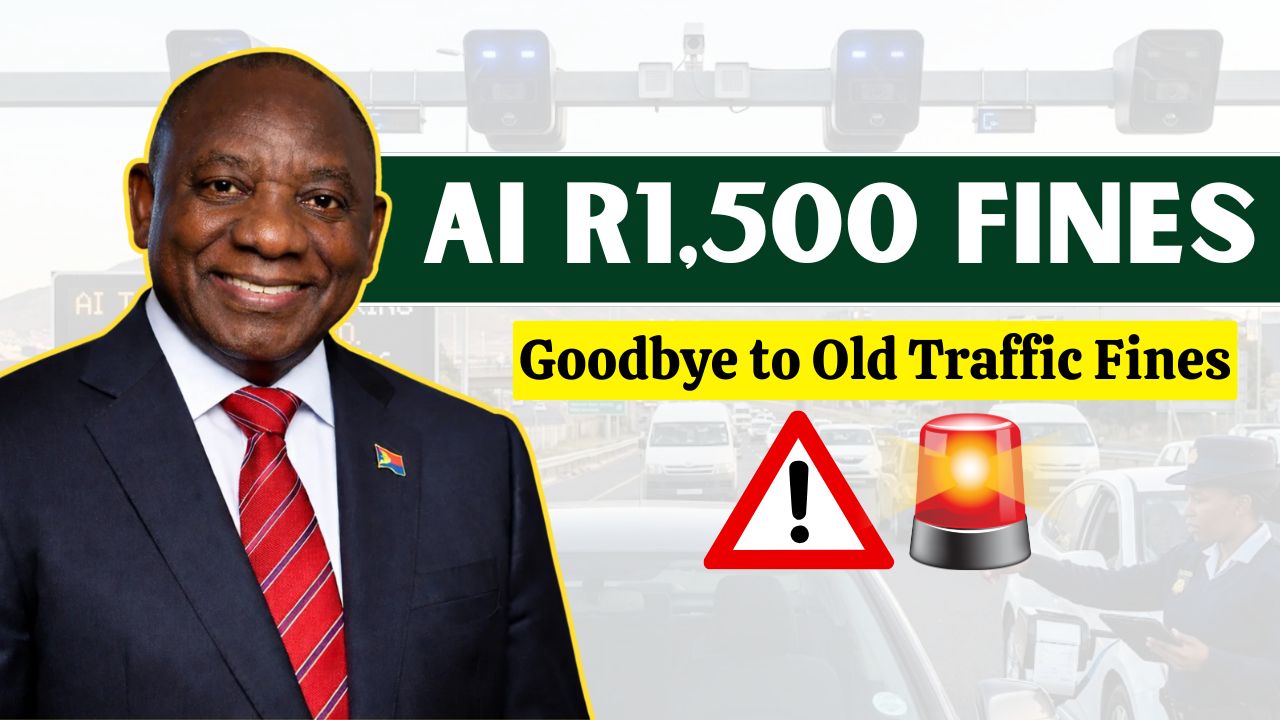
South Africa is preparing to make an entry into a robust system that will be enforced for road traffic after abolishing the old traffic fines system from January 2026. The authorities have also confirmed the launch of AI-powered traffic cameras throughout South Africa. The cameras can automatically detect violations and issue penalties without human intervention. This paradigm shift calls for a question about the future of traffic enforcement like we have never seen before.
Reasons for Bidding Goodbye to the Old Traffic Fines System
In the traditional method, traffic enforcement relied significantly on manual worklines, roadside stops, and officer-issued fines. Select officials have admitted that being inclined to delays, inconsistences, and enforcement gaps were vulnerabilities of this system. AI is therefore designed to furnish a process that is swifter, fairer, and more transparent, utilizing encoded information on violations and automatically generated penalties.
How These AI Traffic Cameras Work
Advanced image analysis and data analytics help in real-time vehicle monitoring. These tools are trained to detect various offences, such as speeding, red-light violations, illegal lane changes, seatbelt non-compliance, and mobile phone use. A particular set of signs in the AI cameras marks the beginning of vehicle image-capturing signals. Although an officer need not be present when the offenses are detected, registration data is generated by the AI camera that is later presented in court as evidence for prosecution.
R1,500 Penalty Imposed to Deter Vehicle Law Violations
From among many deliberative actions, significant among them has been the R1,500 fixed penalty for all major offenses that demand tangible levels of punitive measures. The idea is that a higher fine and penalty-deferred driving behavior will ensure safer roadways. Additionally, once caught, repeat offenders will not just face increased fines, but also demerit points-demerits calculations will vary based on the various legal classifications of the violations-which will result in greater penalties for drivers.
To Be Captured Under AI Monitoring
The implementation of the AI based system is aimed at the most dangerous errors that contribute essentially to the causation of accidents: overspeeding and not stopping at red lights, driving distracted, and not strapping the seatbelt. Unlike traditional systems, AI cameras operate continuously and ensure enforcement even at odd times.
The main differences in the new system are color-coded.
- Aspect Old system New AI system
- Method of Supervision Manual and officer-based Fully automated AI cameras
- Enforcement Hours Limited 24/7
- Fine Processing Delayed and manual Instant electronic processing
- Standard Major Fine Variable R1,500
- Human Intervention High Minimal
Modus Operandi of Fines
Under the new system, fines will be issued digitally and delivered to registered cars against official digital platforms or by registered post. Drivers could view the offense evidence, cites, and timestamps, and they could turn it into dispute, now that disputes will be very clear but difficult to challenge without strong grounds.
This change obviously means motorists will miss out on the fair margin for human intervention. AI cameras work without discretion and hence every single recording of infringement attracts a fine, even though a motorist could smoothly slip through in areas relatively lightly enforced or during off-hours. But now, all that’s set to change.
Scope of Concerns and Public Backlash
While road safety advocates have thrown their weight behind this venture, motorists had few of their questions or concerns, such constitutional issues, privacy, accuracy, and rampant penalties, as road safety advocates provided weak responses. The concern proceeded though insistently, evoking comparisons to Big Brother and mass surveillance.
What Motorists Should Do Before January 2026
Motorists are being warned that they should not take it for granted and must change their ways by adhering strictly to the speed limit and observing traffic signs. Updating vehicle registration particulars is also seen as mandatory to guarantee that fines and notices are received immediately and do not accumulate for a larger figure as a result of missed deadlines.
Conclusion Concerning Traffic Law Reformation
The introduction of AI cameras and R1,500 fines is therefore signaling the cessation of lenience on South African highways. As the old traffic fine system fades away, we are entering an ear in which technology keeps a perpetual eye on drivers for compliance in 2026 and beyond. Compliance-not luck-is now going to determine whether a motorist steers clear of a very costly financial fine.
Goodbye to Old Traffic Fines System: AI Cameras Trigger R1,500 Penalties From January 2026